
Coaches Corner: Progressive Overload
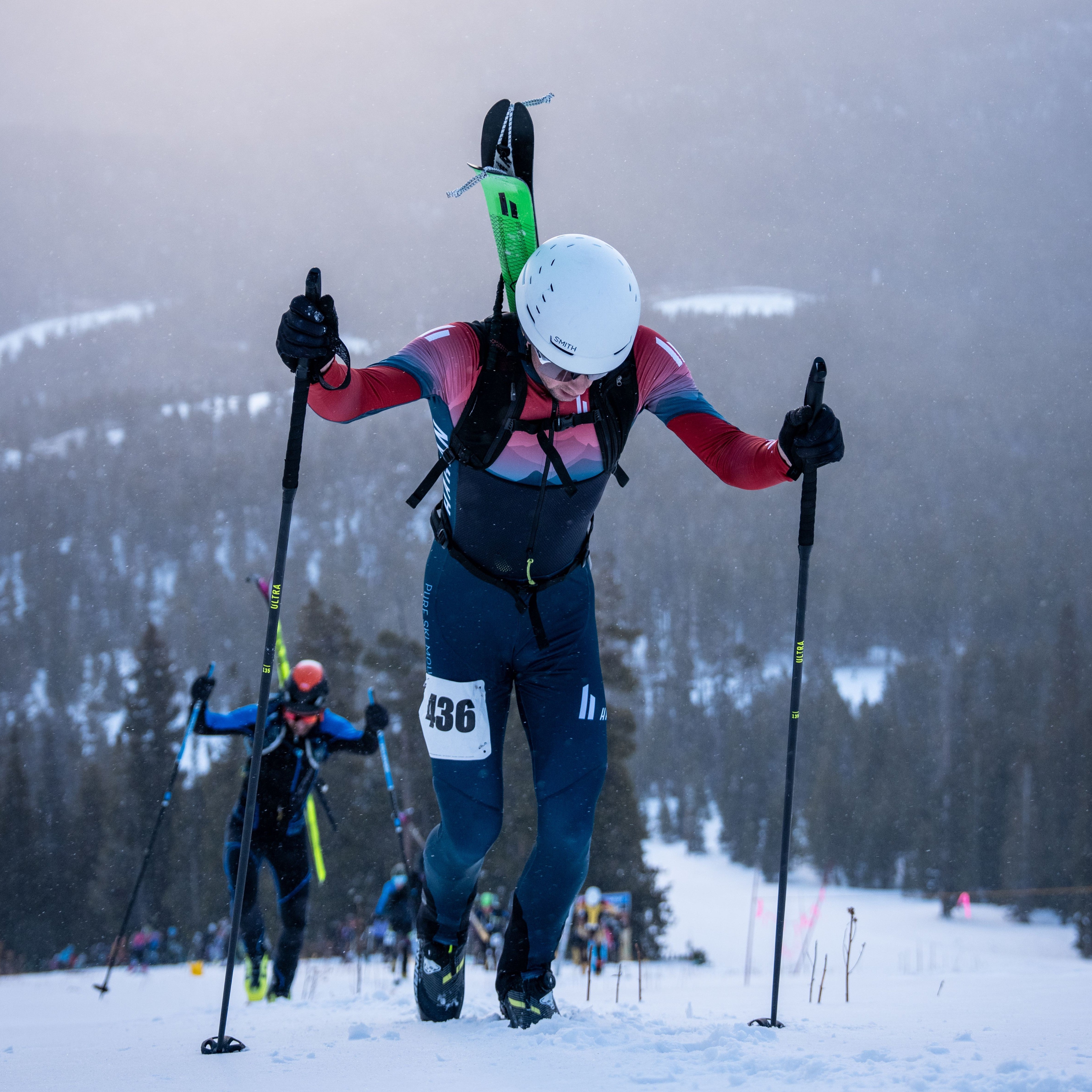
Title Photo by Cullen McHale. Below written by Coach Elliott Bearing.
Learning from Olympians - Mastering Progressive Overload
Last week we got to witness skimo enter the world spotlight at the Olympics. Seeing Americans Cam Smith and Anna Gibson take 4th place in the Mixed Relay, alongside respectable finishes in the Sprint, was a milestone for the sport worldwide as well as here in the US. While these short, high intensity races might look different from the traditional, long-format Individual or Teams races, this publicity is an incredible win for the sport. The Mixed Relay and Sprint disciplines offer a lower barrier to entry, making skimo more accessible for new athletes. It’s an exciting moment and hopefully the long-term impact on our start lines and number of skiers at the local resort doing morning uphill will be profound.
Key to Olympic Prep? Timing and Planning
If the Olympics can teach us anything, it’s about timing. Those athletes build for months and even years to ensure their bodies hit peak performance in one specific moment. But how do we, the everyday "weekend warriors" and amateur uphillers, take those elite methodologies and apply them to our own season?
It comes down to two foundational principles: Specificity and Overload.
What is Progressive Overload?
To climb faster and set new PRs, you have to give your body a reason to change. Progressive overload is the process of strategically increasing the stress placed on your body to trigger adaptation. Without it, you hit a plateau.
The key component to progressive overload is actually its opposite - rest. You’ve likely experienced this as the "wall" where you can no longer add stress indefinitely. To get stronger, you must periodically "peel back" the load (aka rest) to give your body the space to recover and rebuild. This is a process called supercompensation: your body repairs itself to a level slightly higher than where it started, anticipating the next challenge.
How to Execute: The 3:1 Method
For the sake of easy math, let's look at distance as our primary metric. If you are recovering well (eating and sleeping properly), a safe bet is to increase your weekly volume by roughly 10–15% and then have the last week of the block as roughly 50% of the highest weekly distance. This creates a 3-weeks-on, 1-week-off cycle. Here is how that progression looks in practice:
-
Week 1 - 12 miles
-
Week 2 - 14 miles
-
Week 3 - 16 miles
-
Week 4 - 8 miles
When You Hit the Ceiling
Eventually, every amateur hits a ceiling which is usually dictated by time constraints (life responsibilities, work, etc). When you can no longer add more time or miles to your week, it’s time to shift your focus to intensity and specificity.
Instead of just aiming for more miles, try adding additional intensity through structured intervals or shift to steeper, technical terrain that mimics the race course or your goal! This ensures you continue to progress without needing even more training time.
The Bottom Line
The Olympics showed us what is possible at the limit. For the rest of us, the goal is simpler: going further and faster than we did last season. By understanding and applying the cycle of stress and rest, you’ll guarantee yourself continual progression and PRs each season.


Leave a comment
This site is protected by hCaptcha and the hCaptcha Privacy Policy and Terms of Service apply.